
Blog
1807–1815 – Early Internal-Combustion Engine Concepts Take Shape

The idea of powering machines using explosions inside a cylinder took its first real physical form in the early 1800s. In 1807, French engineers Nicéphore and Claude Niépce successfully ran the Pyréolophore, one of the earliest internal-combustion engines, using controlled dust explosions to generate power — and even propelled a boat on the Saône River in France.
In the same year, Swiss inventor François Isaac de Rivaz built a pioneering hydrogen-fuel internal-combustion engine, which he later mounted on an experimental carriage — making it one of the first vehicles driven by combustion power.
These early experiments did not yet resemble the efficient gasoline engines of later decades, but they proved that controlled combustion inside a cylinder could produce mechanical motion — laying important groundwork for 19th-century engine development. Subsequent years saw continued experimentation and refinement of these early ideas, setting the stage for the first commercially practical internal-combustion engines later in the century.
Recent Posts

This diagram explains how a car engine controls and reduces harmful emissions. It shows the flow of air, fuel, and exhaust gases, along with key components like sensors, catalytic converter, and ECU working together to improve engine performance and protect the environment.
Read more
The history of the automobile engine is a story of innovation, experimentation, and constant improvement. From early steam-powered machines to today’s high-efficiency hybrid and electric systems, engine development has shaped the modern world.
Read more
The early 20th century marked a defining era in the historical evolution of the automobile — the rise of the global automotive industry. What began as small-scale mechanical experimentation soon transformed into one of the world’s most powerful manufacturing sectors. As demand for motor vehicles increased, nations recognized the automobile not only as a transportation tool but also as an economic driver.
Read more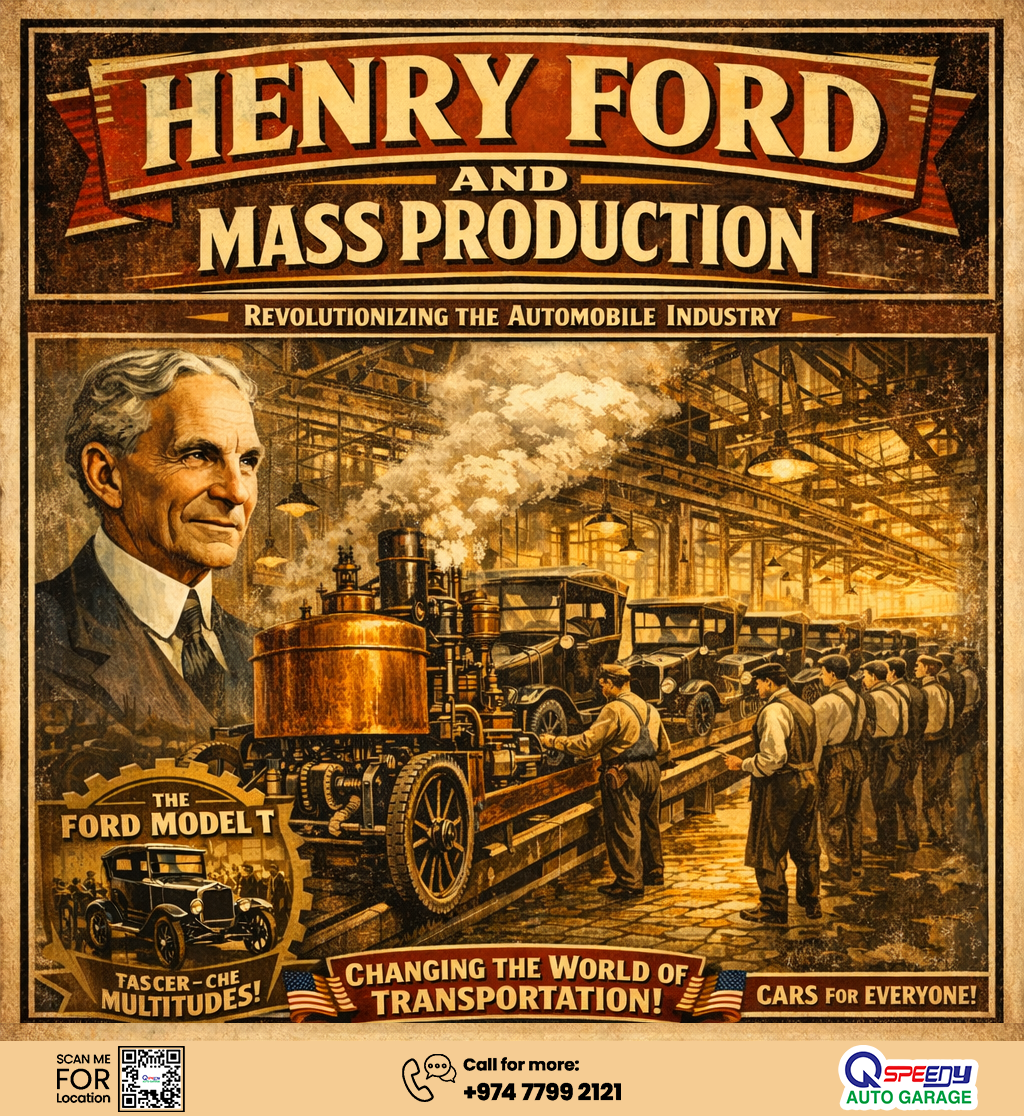
The history of the automobile reached a turning point with the revolutionary vision of Henry Ford, an American industrialist who transformed cars from luxury inventions into everyday necessities. Before Ford’s innovation, automobiles were handcrafted, expensive, and accessible only to the wealthy. Production was slow, and each vehicle required extensive manual labor by skilled workers.
Read more
The period between 1900 and 1930 changed the automobile industry forever. During this time, mass production made cars affordable and accessible to ordinary people, not just the wealthy.
Read more