
Blog
1901 – The Birth of the Mercedes Brand
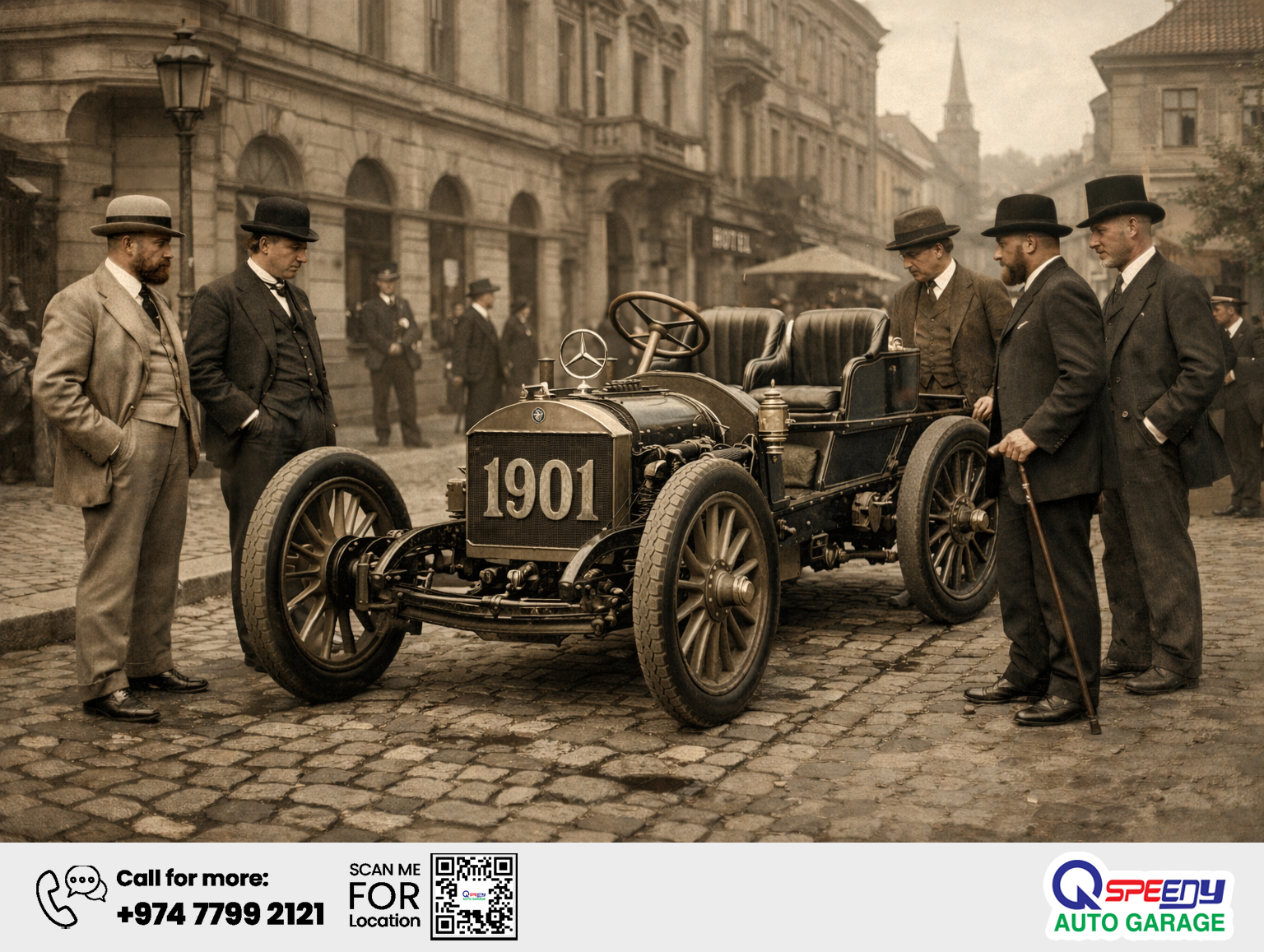
The history of the Mercedes brand officially begins in 1901, a landmark year in the evolution of the modern automobile. At that time, the German company Daimler-Motoren-Gesellschaft (DMG) was working on advanced motor vehicles that would move beyond the limitations of early car designs. A key figure behind this transformation was Emil Jellinek, a businessman, automobile enthusiast, and racing promoter.
Emil Jellinek strongly believed that cars needed to be faster, safer, and more stable. He commissioned DMG to design a new type of automobile and requested that it be named “Mercedes”, after his daughter Mercédès Jellinek. This name soon became synonymous with innovation and quality.
In 1901, DMG introduced the Mercedes 35 horsepower, a revolutionary vehicle that is widely regarded as the first modern automobile. Unlike earlier cars that resembled horse-drawn carriages, the Mercedes 35 hp featured a low center of gravity, a powerful internal combustion engine, a long wheelbase, and a steel frame, making it faster, more reliable, and easier to control.
The success of this car changed the future of the automotive industry. The name Mercedes quickly gained recognition across Europe as a symbol of engineering excellence, performance, and luxury. Although the official brand Mercedes-Benz was formed later in 1926, when Daimler-Motoren-Gesellschaft merged with Benz & Cie., the roots of the brand trace directly back to 1901, when Mercedes was born.
#MercedesHistory #Mercedes1901 #BirthOfMercedes #AutomotiveHistory #AutomotiveHistory #FirstModernCar #Mercedes35HP #GermanEngineering #LuxuryAutomobile #CarInnovation #EmilJellinek
#EmilJellinek #ClassicCars #AutoLegacy #EngineeringExcellence #MercedesHeritage #HistoryOfCars
Recent Posts

This diagram explains how a car engine controls and reduces harmful emissions. It shows the flow of air, fuel, and exhaust gases, along with key components like sensors, catalytic converter, and ECU working together to improve engine performance and protect the environment.
Read more
The history of the automobile engine is a story of innovation, experimentation, and constant improvement. From early steam-powered machines to today’s high-efficiency hybrid and electric systems, engine development has shaped the modern world.
Read more
The early 20th century marked a defining era in the historical evolution of the automobile — the rise of the global automotive industry. What began as small-scale mechanical experimentation soon transformed into one of the world’s most powerful manufacturing sectors. As demand for motor vehicles increased, nations recognized the automobile not only as a transportation tool but also as an economic driver.
Read more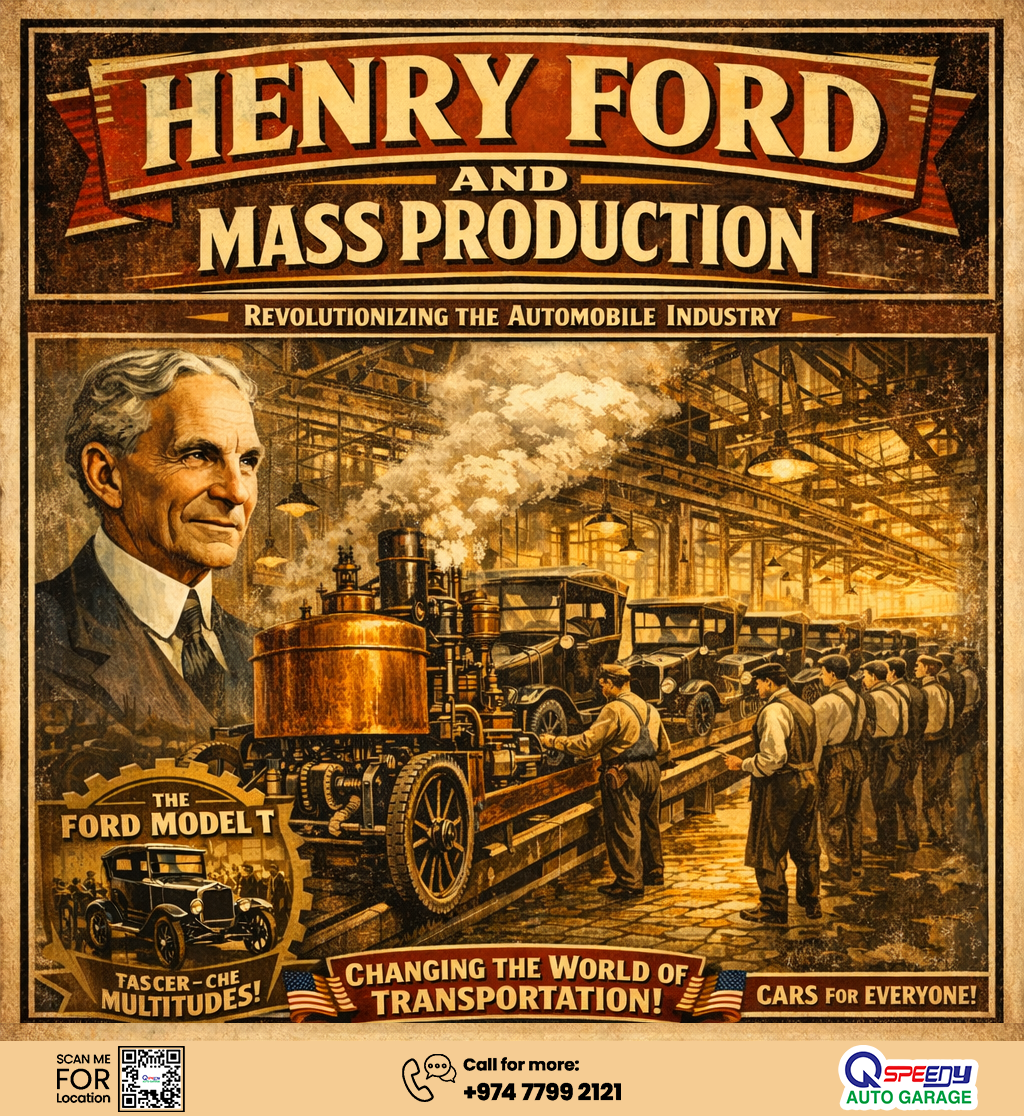
The history of the automobile reached a turning point with the revolutionary vision of Henry Ford, an American industrialist who transformed cars from luxury inventions into everyday necessities. Before Ford’s innovation, automobiles were handcrafted, expensive, and accessible only to the wealthy. Production was slow, and each vehicle required extensive manual labor by skilled workers.
Read more
The period between 1900 and 1930 changed the automobile industry forever. During this time, mass production made cars affordable and accessible to ordinary people, not just the wealthy.
Read more