
Blog
Introduction of Seat Belts, Safer Body Designs, and Emission Regulations

The development of the automobile is closely connected with real-life experiences, accidents, and environmental challenges. In the early years of automobiles, especially before the 1950s, cars were built mainly for speed and style, with very little attention to safety or pollution. Most vehicles had no seat belts, weak body structures, and produced heavy smoke due to inefficient engines. As the number of cars increased, road accidents and air pollution became serious problems, forcing governments and manufacturers to take action.
One of the earliest and most important safety improvements was the introduction of seat belts. In the 1950s, basic lap belts started appearing in cars, but many people did not use them regularly. A major breakthrough came in 1959 when the three-point seat belt was developed and later made standard in many countries. Real-life accident studies showed that seat belts could save lives by preventing passengers from being thrown forward during crashes. Over time, laws were passed in many countries making seat belt use mandatory, which significantly reduced road fatalities.
Along with seat belts, safer body designs were developed based on crash research and real accident data. Engineers realized that strong but flexible car bodies could protect passengers better than rigid frames. This led to the introduction of crumple zones, which absorb impact energy during collisions, and reinforced passenger cabins. Later, airbags were added to work together with seat belts, providing extra protection in severe crashes. These safety features were the result of years of real-world testing, accident investigations, and technological advancements.
At the same time, the environmental impact of automobiles became a growing concern. By the 1960s and 1970s, cities around the world were facing serious air pollution caused by vehicle emissions. Harmful gases such as carbon monoxide and nitrogen oxides were affecting human health and the environment. In response, governments introduced emission regulations that required car manufacturers to reduce pollution levels. Technologies like catalytic converters, cleaner fuels, and more efficient engines were developed to meet these standards.
Over the decades, stricter emission laws pushed the automobile industry toward cleaner and more sustainable solutions. This eventually led to the development of hybrid and electric vehicles, which produce little or no exhaust emissions. Today, modern cars are much safer and more environmentally friendly than earlier models, thanks to the lessons learned from real-life accidents and environmental damage.
In conclusion, the introduction of seat belts, safer body designs, and emission regulations was driven by real-world needs to protect human lives and the environment. These developments have played a crucial role in shaping modern automobiles and continue to influence future innovations in transportation.
Recent Posts

This diagram explains how a car engine controls and reduces harmful emissions. It shows the flow of air, fuel, and exhaust gases, along with key components like sensors, catalytic converter, and ECU working together to improve engine performance and protect the environment.
Read more
The history of the automobile engine is a story of innovation, experimentation, and constant improvement. From early steam-powered machines to today’s high-efficiency hybrid and electric systems, engine development has shaped the modern world.
Read more
The early 20th century marked a defining era in the historical evolution of the automobile — the rise of the global automotive industry. What began as small-scale mechanical experimentation soon transformed into one of the world’s most powerful manufacturing sectors. As demand for motor vehicles increased, nations recognized the automobile not only as a transportation tool but also as an economic driver.
Read more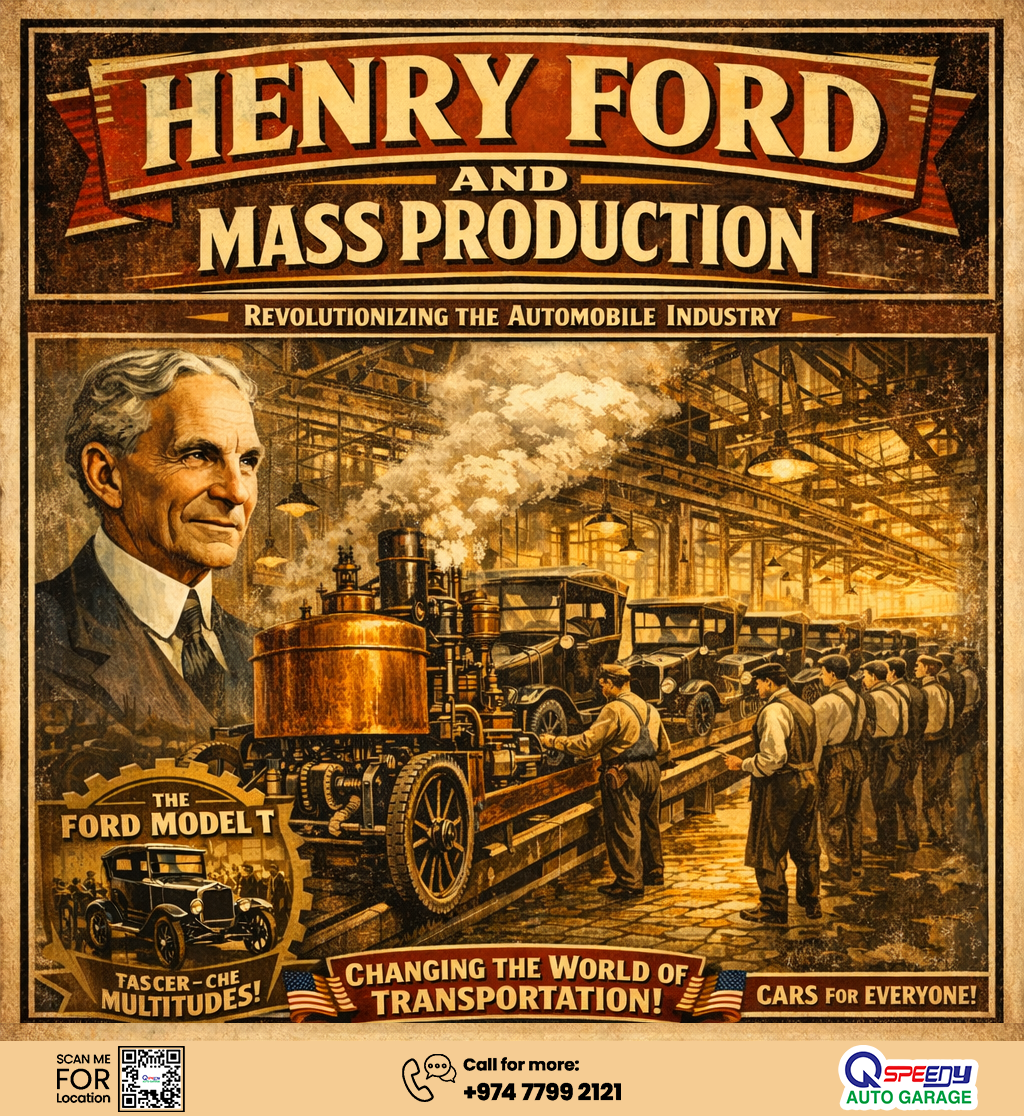
The history of the automobile reached a turning point with the revolutionary vision of Henry Ford, an American industrialist who transformed cars from luxury inventions into everyday necessities. Before Ford’s innovation, automobiles were handcrafted, expensive, and accessible only to the wealthy. Production was slow, and each vehicle required extensive manual labor by skilled workers.
Read more
The period between 1900 and 1930 changed the automobile industry forever. During this time, mass production made cars affordable and accessible to ordinary people, not just the wealthy.
Read more