
Blog
The Historical Evolution of Engines: Powering Human Progress

The Historical Evolution of Engines: Powering Human Progress
From ancient tools to modern machines, the engine has been one of the most transformative inventions in human history. It represents humanity’s constant pursuit of efficiency, power, and progress.
🔥 Early Beginnings
The story of engines begins long before modern technology. Early civilizations relied on human and animal power, followed by simple mechanical systems like water wheels and windmills. These were the first methods of converting natural energy into usable mechanical work.
🚂 The Steam Engine Revolution
The real breakthrough came in the 18th century with the development of the steam engine. Engineers like James Watt improved earlier designs and turned steam engines into reliable sources of power.
This innovation fueled the Industrial Revolution, transforming factories, transportation, and urban life. Steam engines powered trains, ships, and large-scale manufacturing, reshaping the global economy.
🚗 The Rise of Internal Combustion Engines
In the late 19th century, the invention of the internal combustion engine changed everything. Instead of external steam, fuel was burned inside the engine itself.
Pioneers like Nikolaus Otto and Rudolf Diesel introduced engines that were smaller, faster, and more efficient—leading directly to the birth of automobiles, motorcycles, and modern aviation.
⚙️ Modern Engines and Innovation
Today’s engines are marvels of engineering. From high-performance car engines to jet turbines, hybrid systems, and electric motors, modern technology focuses not only on power—but also on efficiency, sustainability, and environmental responsibility.
🌍 Looking Ahead
As the world moves toward cleaner energy, engines continue to evolve. Electric and hydrogen-powered systems represent the next chapter in this long journey, proving that the engine remains at the heart of human innovation.
Engines are more than machines — they are symbols of human ingenuity and progress. 🚀
Recent Posts

This diagram explains how a car engine controls and reduces harmful emissions. It shows the flow of air, fuel, and exhaust gases, along with key components like sensors, catalytic converter, and ECU working together to improve engine performance and protect the environment.
Read more
The history of the automobile engine is a story of innovation, experimentation, and constant improvement. From early steam-powered machines to today’s high-efficiency hybrid and electric systems, engine development has shaped the modern world.
Read more
The early 20th century marked a defining era in the historical evolution of the automobile — the rise of the global automotive industry. What began as small-scale mechanical experimentation soon transformed into one of the world’s most powerful manufacturing sectors. As demand for motor vehicles increased, nations recognized the automobile not only as a transportation tool but also as an economic driver.
Read more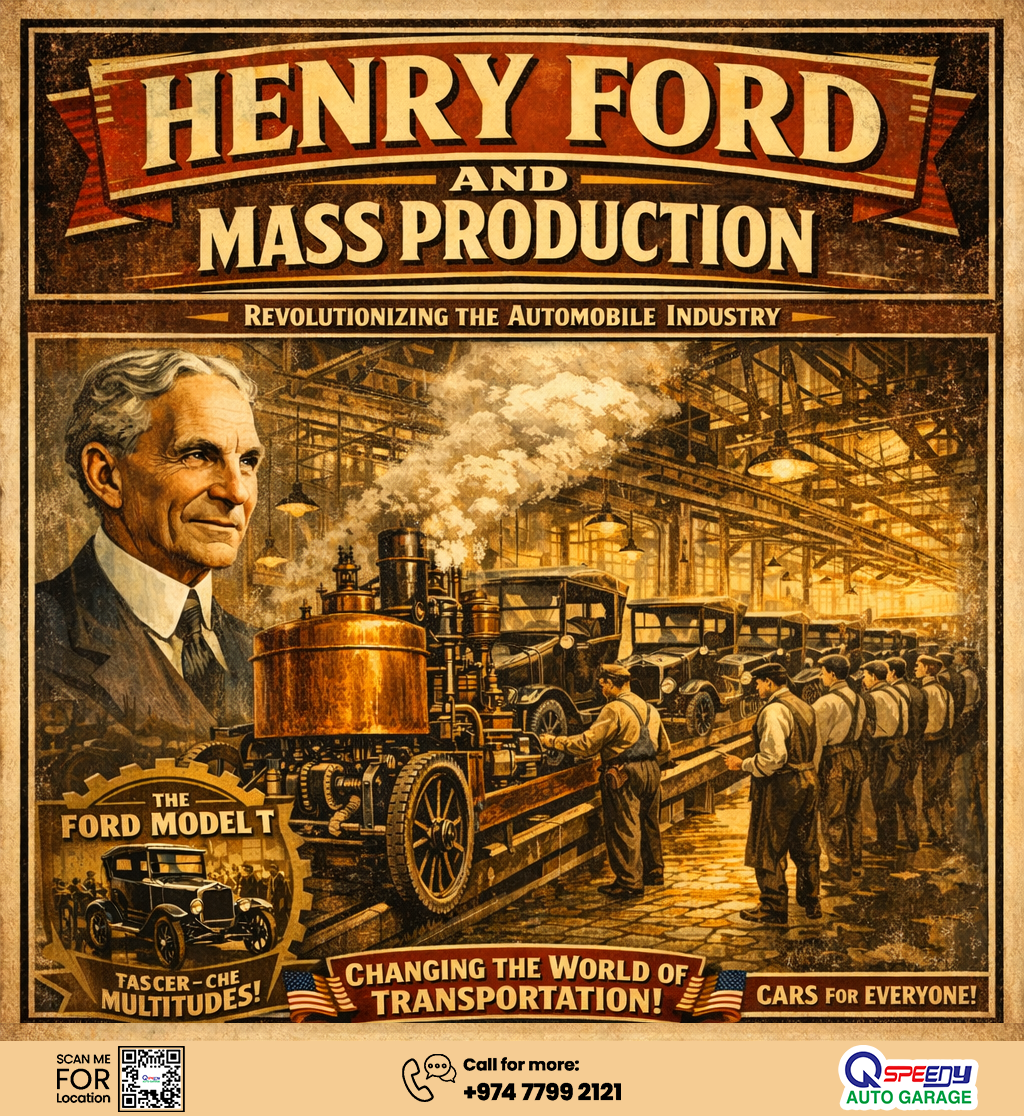
The history of the automobile reached a turning point with the revolutionary vision of Henry Ford, an American industrialist who transformed cars from luxury inventions into everyday necessities. Before Ford’s innovation, automobiles were handcrafted, expensive, and accessible only to the wealthy. Production was slow, and each vehicle required extensive manual labor by skilled workers.
Read more
The period between 1900 and 1930 changed the automobile industry forever. During this time, mass production made cars affordable and accessible to ordinary people, not just the wealthy.
Read more