
Blog

The Rise of Mass Production (1900–1930)
The period between 1900 and 1930 changed the automobile industry forever. During this time, mass production made cars affordable and accessible to ordinary people, not just the wealthy.
Read more
The Historical Evolution of Engines: Powering Human Progress
From ancient tools to modern machines, the engine has been one of the most transformative inventions in human history. It represents humanity’s constant pursuit of efficiency, power, and progress.
Read more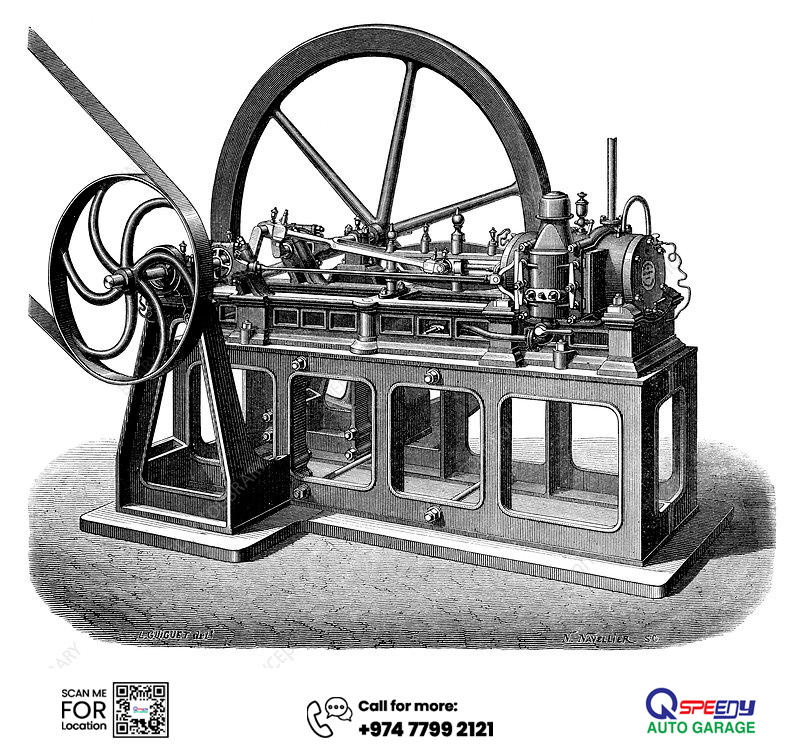
1860 Étienne Lenoir and the Beginning of the Automobile Revolution
In 1860, Étienne Lenoir introduced a revolutionary invention that changed the course of transportation history—the first commercially produced internal-combustion engine. At a time when steam engines dominated mechanical power, Lenoir’s innovation offered a completely new approach. His engine operated by burning illuminating gas inside a cylinder and used an electric spark ignition system, making the combustion process more controlled and practical than earlier experimental designs.
Read more
Computerized Fuel Injection Replaces Carburetors
In the historical development of automobiles, one of the most significant technological advancements was the replacement of carburetors with computerized fuel injection systems. For many decades, carburetors were used in automobile engines to mix air and fuel before combustion. Although carburetors were mechanically simple and inexpensive, they had several limitations, such as poor fuel efficiency, difficulty in cold starting, and imprecise control over the air–fuel mixture.
Read more