
Blog

Introduction of Seat Belts, Safer Body Designs, and Emission Regulations
The development of the automobile is closely connected with real-life experiences, accidents, and environmental challenges. In the early years of automobiles, especially before the 1950s, cars were built mainly for speed and style, with very little attention to safety or pollution. Most vehicles had no seat belts, weak body structures, and produced heavy smoke due to inefficient engines. As the number of cars increased, road accidents and air pollution became serious problems, forcing governments and manufacturers to take action.
Read more
1903 – The Founding of the Ford Motor Company
In 1903, the Ford Motor Company was founded in Detroit, marking a turning point in the history of the automobile industry. The company was established by Henry Ford along with a group of investors, with the goal of producing reliable and affordable automobiles for everyday people.
Read more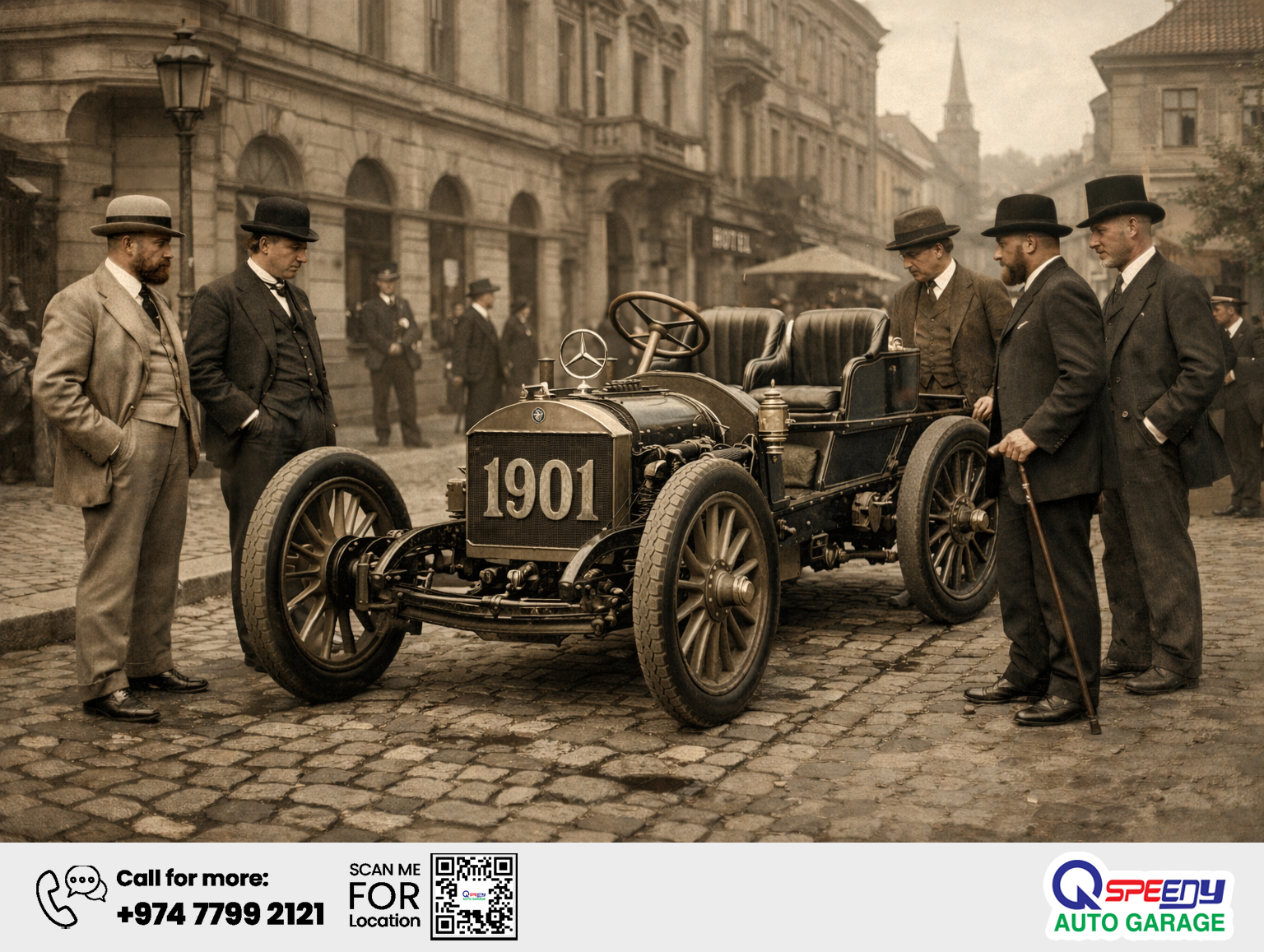
1901 – The Birth of the Mercedes Brand
The history of the Mercedes brand officially begins in 1901, a landmark year in the evolution of the modern automobile. At that time, the German company Daimler-Motoren-Gesellschaft (DMG) was working on advanced motor vehicles that would move beyond the limitations of early car designs. A key figure behind this transformation was Emil Jellinek, a businessman, automobile enthusiast, and racing promoter.
Read more
1807–1815 – Early Internal-Combustion Engine Concepts Take Shape
The idea of powering machines using explosions inside a cylinder took its first real physical form in the early 1800s. In 1807, French engineers Nicéphore and Claude Niépce successfully ran the Pyréolophore.
Read more